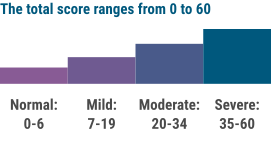
For bipolar I and II depression in adultsSuperior depression symptom relief with CAPLYTA
as monotherapy at 6 weeks vs placebo1
Change from baseline in MADRS total score at 6 weeks1,2
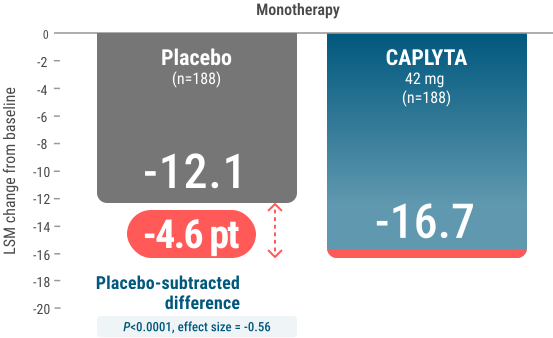
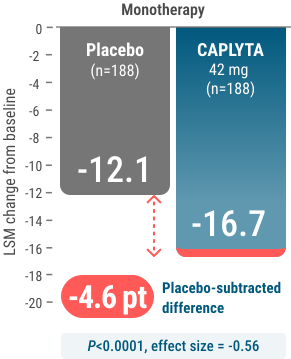

CAPLYTA separated from placebo in 1 week in the pivotal monotherapy trial*
*Weekly time points prior to 6 weeks were not powered for statistical comparison and are descriptive only.2
All patients had moderate or severe depression at baseline in the monotherapy and adjunctive trials.2,3
Secondary endpoints from pivotal monotherapy trial at 6 weeks2†
- 51% response (MADRS total score ≥50% reduction) vs 37% with placebo
- 40% remission (MADRS total score ≤12) vs 34% with placebo
†Limitation: These secondary endpoints were not powered for statistical comparison and are descriptive only; results require cautious interpretation.2

Reduction in depression symptoms with CAPLYTA as adjunctive therapy with lithium or valproate (-16.9 change in MADRS total score from baseline vs -14.5 with placebo; P=0.021)3
LSM=least squares mean; MADRS=Montgomery-Åsberg Depression Rating Scale.
PRESPECIFIED SECONDARY ANALYSIS IN ADULTS WITH BIPOLAR I OR II DEPRESSION
Change in depression symptoms in patients with bipolar II depression as monotherapy at 6 weeks vs placebo4
Secondary analysis of MADRS total score over 6 weeks in adults with bipolar II depression
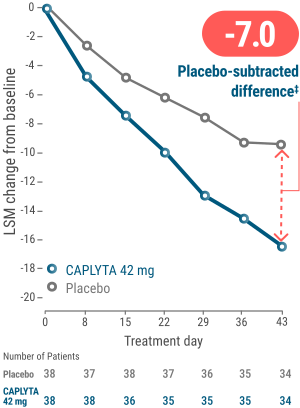
Limitation: These secondary endpoints were not powered for statistical comparison and are descriptive only; results require cautious interpretation.
‡Treatment difference is calculated as LSM of CAPLYTA minus LSM of placebo; all values are rounded.