For SCHIZOPHRENIA in adultsWeight change, metabolic effects, and prolactin
| Pooled safety data from 4- to 6-week trials1 | |||||
|---|---|---|---|---|---|
| BODY WEIGHT (mean change from baseline) | CAPLYTA (N=406) | Placebo (N=412) | |||
| Average weight change (lbs) | +3.5 | +2.9 | |||
| Metabolic profile (mean change from baseline, mg/dL) | |||||
| Glucose | +0.7 | +2.1 | |||
| Insulin (μIU/mL) | +2.4 | +0.9 | |||
| Total cholesterol | -3.0 | -1.6 | |||
| LDL cholesterol | +1.2 | +1.0 | |||
| HDL cholesterol | -3.3 | -4.2 | |||
| Triglycerides | -1.7 | +4.6 | |||
| Prolactin (ng/mL) | -1.3 | -0.2 | |||
Warnings & Precautions: Antipsychotic drugs have been reported to cause:
- Metabolic Changes, including hyperglycemia, diabetes mellitus, dyslipidemia, and weight gain. Hyperglycemia, in some cases extreme and associated with ketoacidosis, hyperosmolar coma or death, has been reported in patients treated with antipsychotics. Measure weight and assess fasting plasma glucose and lipids when initiating CAPLYTA and monitor periodically during long-term treatment.
Please see additional Important Safety Information, including Boxed WARNINGS, below.


Changes in weight and metabolic effects were similar to placebo1
CAPLYTA mean change from baseline was similar to placebo in terms of glucose, total cholesterol, and triglycerides1
Relapse Trial Data
Changes in body weight and metabolic effects were similar to placebo1
| Body morphology, prolactin, and cardiometabolic parameters in the double-blind study1* | |||||
|---|---|---|---|---|---|
| BODY WEIGHT (mean change from baseline) | CAPLYTA (n=110) | Placebo (n=114) | |||
| Weight (lb) | 0.4 | -0.2 | |||
| BMI (kg/m2) | 0.1 | 0.0 | |||
| Waist circumference (in) | 0.2 | -0.4 | |||
| Metabolic profile (mean change from baseline, mg/dL) | |||||
| Prolactin (ng/mL) | -3.3 | -2.9 | |||
| Total cholesterol | -6.1 | -0.8 | |||
| HDL cholesterol | 2.0 | 4.9 | |||
| LDL cholesterol | -4.8 | -2.9 | |||
| Triglycerides | -11.0 | -3.3 | |||
| Glucose | 2.0 | -2.3 | |||
| Insulin (μIU/mL) | 3.2 | 2.6 | |||
Potentially clinically significant weight increase and decrease (≥7% change from open-label treatment baseline) occurred at similar rates in the CAPLYTA and placebo groups at the end of double-blind treatment.1†
*Mean change from baseline of open-label treatment to end of double-blind treatment. Baseline was defined as the last assessment before the first dose of open-label study drug.¹
†Increases: 11.8% (CAPLYTA) vs 9.7% (placebo). Decreases: 13.6% (CAPLYTA) vs 9.7% (placebo).¹
BMI=body-mass index; HDL=high-density lipoprotein; LDL=low-density lipoprotein.
Open-label safety switch study
Swipe chart for more
Changes observed in patients
switching from another antipsychotic
to CAPLYTA for 6 weeks
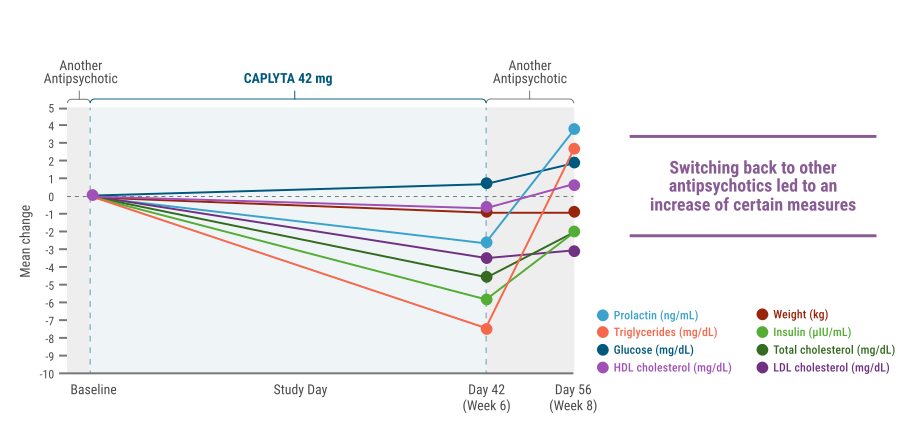
Limitation: This open-label trial was designed primarily to assess safety and tolerability. Efficacy outcomes are exploratory and should be interpreted with caution, as the study was not powered or controlled to assess treatment efficacy.
The most frequently occurring TEAEs (≥5% of patients) were somnolence, headache, and dry mouth.3
The most common antipsychotics in the pre-/post-treatment period were risperidone, quetiapine, aripiprazole, and olanzapine.3
TEAE=treatment-emergent adverse event.