For SCHIZOPHRENIA in adultsChange in schizophrenia symptom severity score in patients on CAPLYTA over 1 year1
Swipe chart for more
throughout the 1-year OL study1
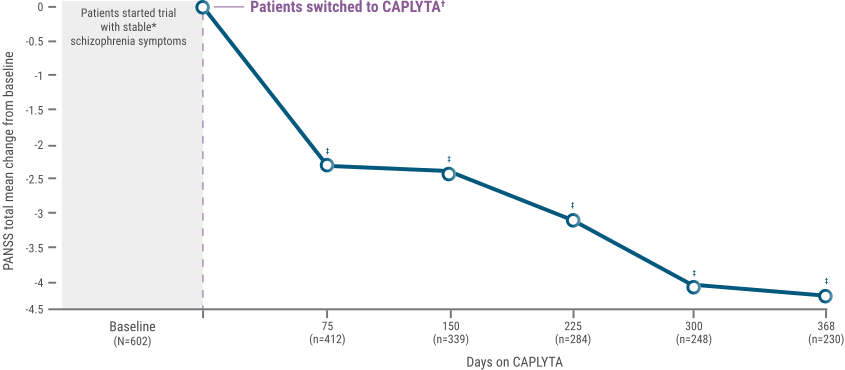
Limitation: This open-label safety trial was designed primarily to assess long-term safety and tolerability. Efficacy outcomes are exploratory and should be interpreted with caution, as the study was not powered or controlled to assess treatment efficacy.
Thirty-eight percent (230/602) of patients completed 368 days of observation. The most common reasons for discontinuation from the 1-year treatment period were withdrawn consent, adverse events, and protocol violation.1
*Stable symptoms were defined as having a score of ≤4 on the CGI-S at screening and baseline and ≤4 on each of four core items of the PANSS (delusions, hallucinatory behavior, conceptual disorganization, and suspiciousness) at baseline, with no hospitalization for a psychiatric illness within 3 months of Day 1.1
†The most common prior antipsychotics at the time of switching (≥10% of patients) were risperidone, quetiapine, aripiprazole, olanzapine, haloperidol, or ziprasidone.1
‡P <0.001 vs baseline.1
CGI-S=Clinical Global Impression-Severity of Illness scale; OL=open-label; PANSS=Positive and Negative Syndrome Scale.
Over 1 year, reductions in certain metabolic measures, prolactin, and weight observed in patients on CAPLYTA1
Swipe chart for more
metabolic parameters for CAPLYTA
from screening to Day 3681
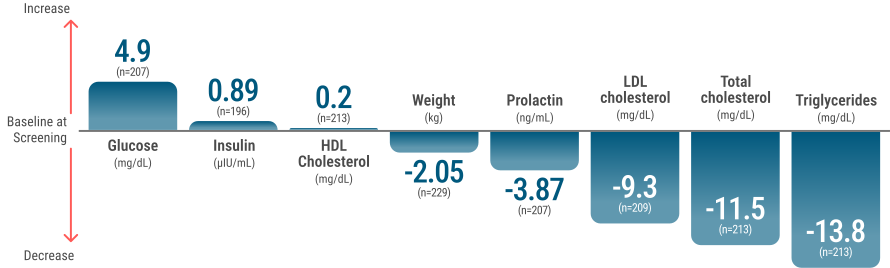
Limitation: This open-label safety trial was designed primarily to assess safety and tolerability. Efficacy outcomes are exploratory and should be interpreted with caution, as the study was not powered or controlled to assess treatment efficacy.

Body weight for patients who started the 1-year study1:

25% (150/595) of patients
experienced ≥7% weight decrease
9% (55/595) of patients experienced ≥7% weight increase
HDL=high-density lipoprotein; LDL=low-density lipoprotein.
The PANSS is a 30-item scale that measures the following symptoms2-4‖:
Positive Subscale Symptoms:
- Delusions
- Hallucinations
- Conceptual disorganization
- Excitement
- Grandiosity
- Suspiciousness/persecution
- Hostility
Negative Subscale Symptoms:
- Blunted affect
- Emotional withdrawal
- Poor rapport
- Passive/apathetic social withdrawal
- Difficulty in abstract thinking
- Lack of spontaneity and flow of conversation
- Stereotyped thinking
General Psychopathology Subscale Symptoms:
- Somatic concern
- Anxiety
- Guilt feelings
- Tension
- Mannerisms and posturing
- Depression
- Motor retardation
- Uncooperativeness
- Unusual thought content
- Disorientation
- Poor attention
- Lack of judgement and insight
- Disturbance of volition
- Poor impulse control
- Preoccupation
- Active social avoidance
PANSS Prosocial Subscale
The PANSS Prosocial Subscale is a 6-item scale derived from the PANSS total score to measure social functioning. It includes the following symptoms:
- Hallucinations
- Suspiciousness/persecution
- Emotional withdrawal
- Passive/apathetic social withdrawal
- Stereotyped thinking
- Active social avoidance
‖Each item is rated by a clinician on a 7-point scale. A score of 1 indicates the absence of symptoms, and a score of 7 indicates extremely severe symptoms. The PANSS total score may range from 30 to 210, with higher scores reflecting greater overall symptom severity.2,4
PANSS=Positive and Negative Syndrome Scale.