Exploratory analysis in adults with MDDChange from baseline average score across individual MADRS items at 6 weeks1‑3*
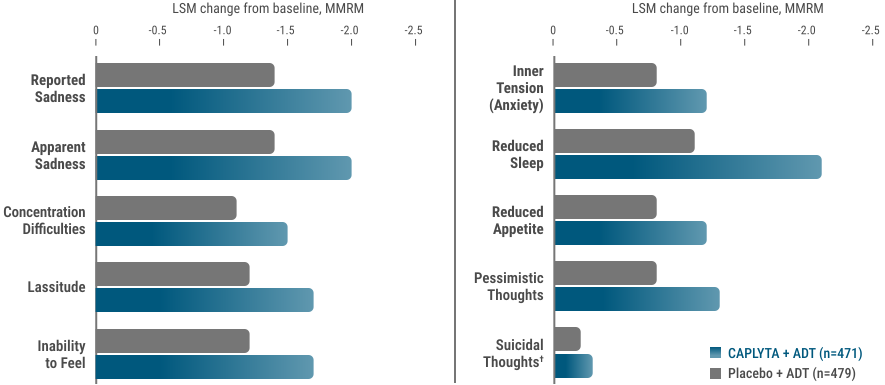
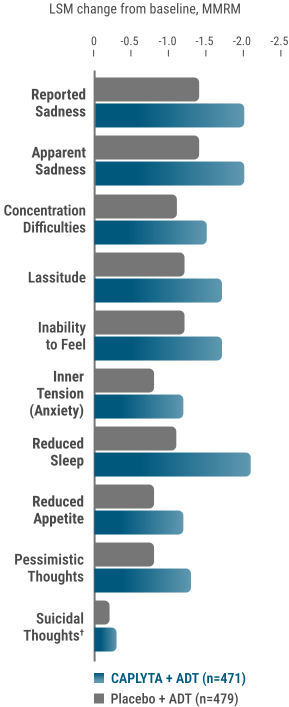
IMPROVEMENT: Numerical improvement seen across the total score of all 10 MADRS items at Week 6
Numerical improvement seen across all 10 MADRS items at Week 6
†Patients were excluded from study enrollment if investigator determined they were at significant risk for suicidal behavior during participation in the study; the patient scored “yes” on Suicidal Ideation Items 4 or 5 of the Columbia-Suicide Severity Rating Scale within 6 months prior to screening or at baseline; the patient scored “yes” on Suicidal Ideation Items 4 or 5 since the screening visit; the patient had 1 or more suicide attempts within 2 years prior to screening; the patient scored ≥5 on MADRS Item 10 (Suicidal Thoughts) at screening or baseline; or the patient was considered to be in imminent danger to him/herself or others.1,2
Limitation: This pre-specified analysis was not powered to draw conclusions for individual items of MADRS.
mITT population.
*As defined by individual MADRS item scores.
ADT=antidepressant therapy; LSM=least squares mean; MADRS=Montgomery-Åsberg Depression Rating Scale; MDD=major depressive disorder; mITT=modified intention to treat; MMRM=mixed model for repeated measures.