Mechanism of action and pharmacology
CAPLYTA activity may involve antagonism at 5‑HT2A and partial agonism at D2 receptors1
The mechanism of action of CAPLYTA is unknown. The activity of CAPLYTA is thought to be mediated through a combination of antagonism of central serotonin 5‑HT2A receptors and partial agonism at central dopamine D2 receptors.1
Receptor binding of CAPLYTA


High Affinity1
Nearly full saturation for serotonin 5-HT2A
Full saturation: >80% occupancy1
Allows for lower amounts of D2 receptor occupancy at therapeutic doses2
Moderate Affinity1
39% receptor occupancy1
High D2 receptor occupancy is linked to increased risks of EPS and elevated prolactin levels2,3
Moderate Affinity1
Inhibition of SERT contributes to increased serotonin in the synapse2
May contribute to indirect activation of the glutamatergic AMPA and NMDA receptors4
Low Affinity1
OFF-TARGET RECEPTORS
(e.g., muscarinic and histaminergic receptors)
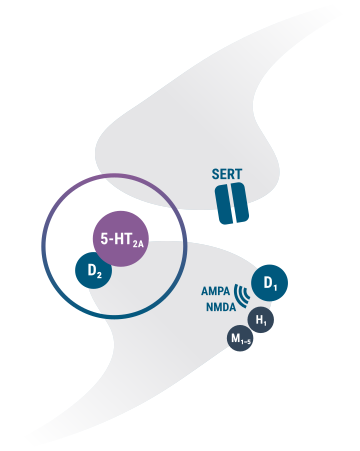
Binding affinity shown above by Ki values. Affinity is at the therapeutic dose.
*CAPLYTA shows little affinity (<50% inhibition at 100 nM) at muscarinic and histaminergic receptors.1
EPS=extrapyramidal symptoms; SERT=serotonin transporter.