Post hoc pooling of Studies 501 and 502Change in depressive symptoms vs an antidepressant alone among MDD patients with symptoms of anxiety1*
Change from baseline in MADRS total score at 6 weeks (pooled results)2
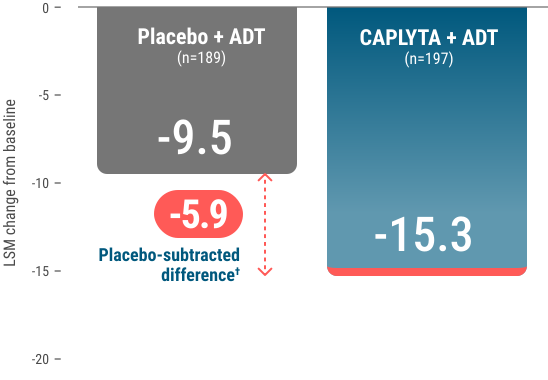
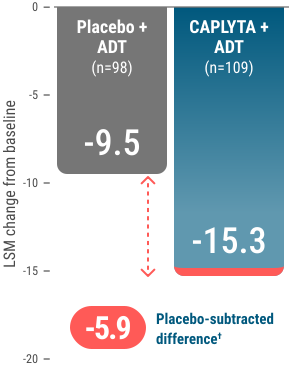
Limitation: This post hoc analysis is not powered for statistical comparison and is descriptive only. Results require cautious interpretation.
*CAPLYTA is not approved for the treatment of anxiety disorders. Symptoms of anxiety in patients with MDD are based on DSM-5 criteria for anxious distress.
†Treatment difference is calculated as LSM of CAPLYTA + ADT minus LSM of placebo + ADT; all values are rounded.
Anxious distress criteria
As defined by the DSM-5, anxious distress is defined by the presence of ≥2 of the following symptoms during a depressive episode4:
- Feeling keyed up
- Feeling unusually restless
- Difficulty concentrating because of worry
- Fear that something bad might happen
- Fear of losing control


Patients with anxious distress at baseline5,6:
46% for CAPLYTA + an antidepressant in Study 501 (n=239)
38% for CAPLYTA + an antidepressant in Study 502 (n=232)
ADT=antidepressant therapy; DSM=Diagnostic and Statistical Manual of Mental Disorder; LSM=least squares mean; MADRS=Montgomery-Åsberg Depression Rating Scale; MDD=major depressive disorder; PHQ-9=Patient Health Questionnaire-9.