Dosing

The maintenance dose (42 mg) is the starting and effective dose for CAPLYTA1

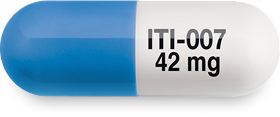
CAPLYTA® (lumateperone) 42 mg capsule

Not actual size

Convenient, once-daily dosing with no need for titration

  • CAPLYTA can be taken with or without food

Flexibility to be taken around a patient's schedule

  • CAPLYTA can be taken at any time
  • In aMDD trials, CAPLYTA was taken in the evening2,3

CAPLYTA offers two dosage strengths for Special Populations.1

Reduce dosing for1:

  • Concomitant use with moderate CYP3A4 inhibitors (21 mg) or with strong CYP3A4 inhibitors (10.5 mg)
  • Patients with moderate (Child-Pugh class B) or severe (Child-Pugh class C) hepatic impairment (21 mg)

Avoid concomitant use with CYP3A4 inducers.

Increased monitoring for SRI-associated adverse reactions is recommended when used with SRIs; including in geriatric patients who may be at greater risk for clinically significant hyponatremia.

  • Although no clinically significant drug interactions with adjunctive SSRI/SNRIs in MDD were observed in CAPLYTA clinical trials, CAPLYTA's moderate serotonin transporter (SERT) activity may increase the risk of SRI-associated adverse reactions (e.g., serotonin syndrome, hyponatremia)

aMDD=adjunctive major depressive disorder; SNRI=serotonin and norepinephrine reuptake inhibitor; SRI=serotonin reuptake inhibitor; SSRI=selective serotonin reuptake inhibitor.


References: 1. CAPLYTA Prescribing Information. 2. Durgam S, Earley WR, Kozauer SG, et al. Lumateperone as adjunctive therapy in patients with major depressive disorder: results from a randomized, double-blind, phase 3 trial. J Clin Psychiatry. 2025; 86(4). doi:10.4088/JCP.25m15848 3. Data on File (REF-02960). 4. For Healthcare Professionals | FDA's Examples of Drugs that Interact with CYP Enzymes and Transporter Systems. U.S. Food and Drug Administration. Updated June 5, 2023. https://www.fda.gov/drugs/drug-interactions-labeling/healthcare-professionals-fdas-examples-drugs-interact-cyp-enzymes-and-transporter-systems 5. Downs G, Greer R, Moses G, et al. Drug interactions in people on cannabidiol: is there cause for concern? Cannabis Cannabinoid Res. 2024. doi:10.1089/can.2024.0041