For major depressive disorder (Adjunctive) in adultsOpen-label safety trial (Study 503) in adults
Patients on CAPLYTA sustained treatment over 6 months1,2
9 out of 10 patients chose to continue into the open-label safety extension, and 85% of patients stayed on CAPLYTA during the 6-month, open-label safety trial
- Safety profile observed in the open-label trial was consistent with pivotal trials
Change in depression symptom severity score over 6 months3
Swipe chart for more
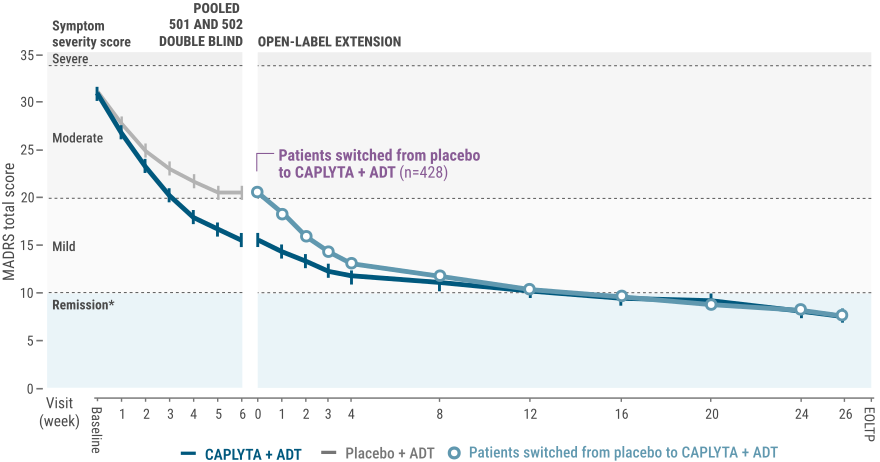
80% of patientsmet clinically defined response(reduction of MADRS total score ≥50%)2
65% of patientsmet clinically defined remission(MADRS total score of ≤10)2
Limitation: This open-label safety extension trial was designed primarily to assess long-term safety and tolerability. Efficacy outcomes are exploratory and should be interpreted with caution, as the study was not powered or controlled to assess treatment efficacy.
*Remission defined as MADRS Total Score ≤10.
ADT=antidepressant therapy; EOLTP=end of open-label treatment period; MADRS=Montgomery-Åsberg Depression Rating Scale.